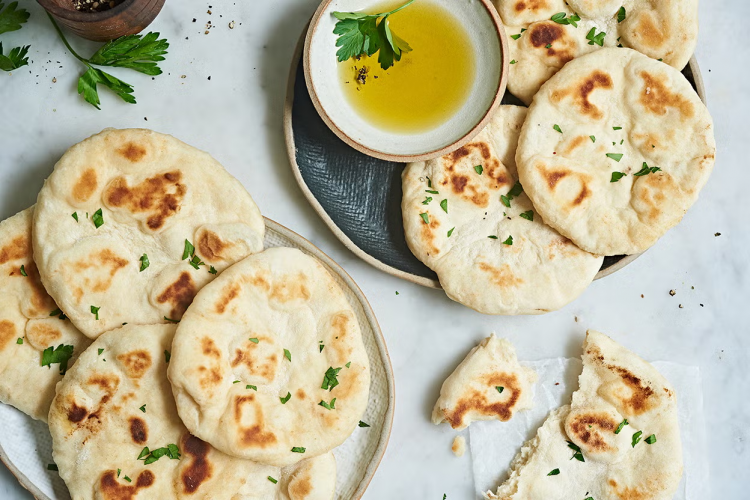
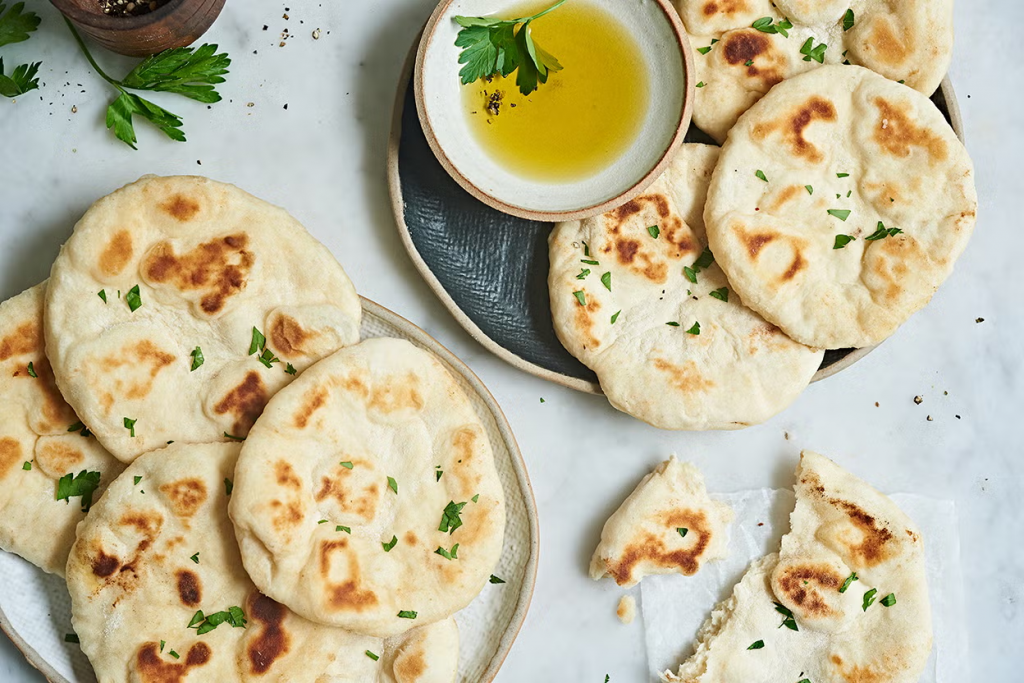
There’s something almost magical about watching dough transform over heat. That moment when a pale disk puffs into a balloon, creating its own pocket—it’s the kind of kitchen alchemy that never gets old.
This skillet flatbread recipe bridges the gap between traditional pita and quick stovetop bread. You get the signature pocket (perfect for stuffing with falafel, gyro meat, or hummus) without wrestling with a screaming-hot pizza stone or heating your entire kitchen. Whether you’re a bread beginner or a seasoned home baker looking for a faster flatbread fix, this method delivers consistent, restaurant-quality results.
Why This Recipe Works
• Stovetop control: A cast-iron or non-stick skillet gives you precise heat management—no guessing if your oven’s hot enough.
• Steam-pocket science: The high, dry heat creates steam inside the dough, forcing it to puff. We’ll cover the skillet briefly to trap extra moisture and guarantee that pocket.
• Short rise time: Just 30 minutes of resting. The dough develops enough gluten structure for chewiness without an all-day commitment.
What You’ll Need
• 2½ cups (300g) all-purpose flour — Spooned and leveled; bread flour works too
• 1 cup (240ml) warm water — 105–110°F (40–43°C), like bathwater
• 1 tsp active dry yeast — Or ¾ tsp instant yeast
• 1 tbsp olive oil — Plus more for the bowl
• 1 tsp sugar — Feeds the yeast, aids browning
• 1 tsp salt — Essential for flavor
Step-by-Step Instructions
1. Activate the Yeast
In a small bowl, combine warm water, sugar, and yeast. Let sit 5–10 minutes until foamy. If it doesn’t foam, your yeast is dead—start over.
Chef’s Note: This “proofing” step isn’t just tradition. You’re verifying your yeast is alive and kicking before committing your flour.
2. Mix the Dough
In a large bowl, combine flour and salt. Make a well in the center, pour in the yeast mixture and olive oil. Stir with a wooden spoon until a shaggy dough forms.
3. Knead Until Smooth
Turn onto a lightly floured surface. Knead 8–10 minutes until the dough is smooth, elastic, and springs back when poked. It should pass the “windowpane test”—stretch a small piece thin enough to see light through without tearing.
Pro Tip: Under-kneaded dough won’t trap steam properly. That pocket depends on gluten strength.
4. First Rise
Place dough in an oiled bowl, cover with a damp towel. Let rise 30 minutes at room temperature until doubled. (No rush here—if your kitchen is cold, give it 45.)
5. Shape the Flatbreads
Punch down dough and divide into 6 equal pieces (about 80g each). Roll into balls, then flatten with a rolling pin to ¼-inch thick circles (roughly 6–7 inches across).
6. The Skillet Method — The Critical Step
Heat a dry cast-iron or heavy skillet over medium-high heat (about 375°F/190°C if you have an infrared thermometer).
Place one dough circle in the skillet. Cover immediately with a lid. Cook 1–2 minutes until bubbles form and the bottom has golden-brown spots. Flip, cook 1 minute more. The bread should puff dramatically—that’s your pocket forming.
Why the lid? It traps steam, which pushes the dough upward and sets the pocket structure before the exterior hardens.
7. Cool & Store
Stack cooked flatbreads on a plate and cover with a clean towel. The trapped steam keeps them soft. Serve warm or at room temperature.
Chef’s Pro Tips for Perfect Pita Every Time
- Roll evenly: Thick spots won’t cook through; thin spots will burn.
- Dry skillet = better puff: Oil creates a barrier that can prevent full expansion. If you want char and flavor, brush with oil after cooking.
- Don’t skip the rest: That 30-minute rise develops flavor and texture. “Quick” flatbreads that skip this taste like crackers.
- Make it whole wheat: Substitute up to 50% whole wheat flour. You’ll need slightly more water (2–3 tbsp) and a longer knead.
Frequently Asked Questions
Can I make this flatbread without yeast?
Yes, but it won’t pocket. Substitute 1½ tsp baking powder and skip the rise time for a quick flatbread—more naan-style than pita.
Why didn’t my pita bread puff up?
Three culprits: (1) Skillet wasn’t hot enough, (2) Dough was rolled too thick or unevenly, (3) Gluten wasn’t developed enough during kneading.
How do I store leftover flatbread?
Cool completely, then store in an airtight bag at room temperature for 2 days, or freeze up to 3 months. Reheat directly on a hot skillet for 30 seconds per side.
What’s the difference between flatbread and pita?
All pitas are flatbreads, but not all flatbreads are pitas. True pita has that signature pocket, created by steam expansion. This recipe delivers both—flatbread texture with pita functionality.
Try these next: Creamy Homemade Hummus | Crispy Baked Falafel | 10 Ways to Use Leftover Flatbread
Just highlight everything above, copy, and paste into your WordPress editor. The bold and bullet formatting should carry over. Add your photos where you see fit! 📸